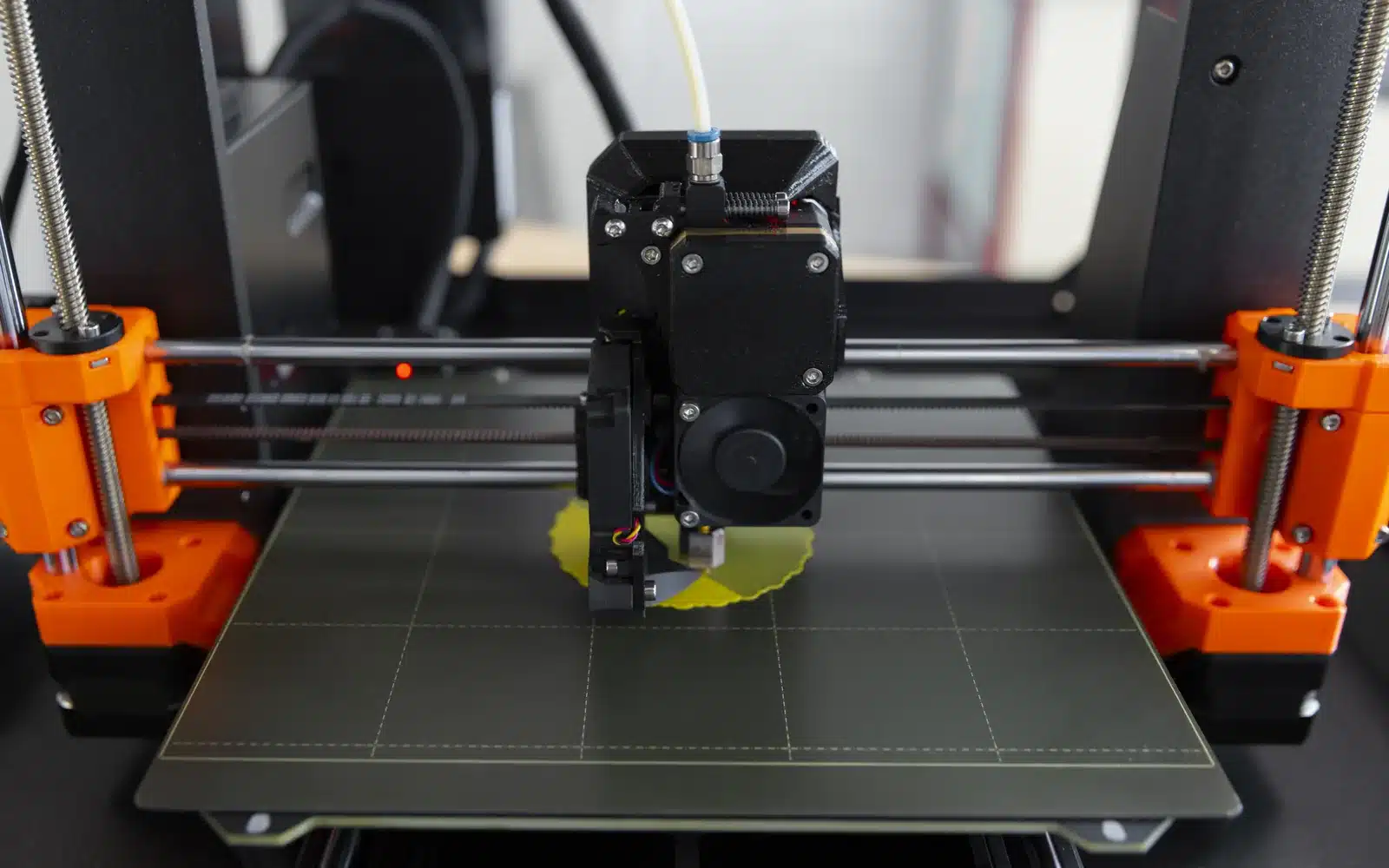
Quick diagnosis
Fine strands between separate features are stringing. Thick branches, rough extrusion or repeated blobs can also involve wet filament, excess heat or pressure behavior.
1. Check the filament first
Small pops, steam-like wisps, bubbles and a rough strand suggest moisture. Compare with a known-dry spool or dry the material using the filament maker’s temperature and time guidance. Do not use a kitchen oven unless it is designed and controlled for this purpose.
2. Test a lower nozzle temperature
Print the same small tower and reduce by 5 °C within the filament range. Inspect layer bonding as well as strings. Stop when flow becomes inconsistent or layers weaken.
3. Adjust retraction in small steps
Direct-drive systems often use shorter distances than Bowden systems. Stay near the printer profile and change distance modestly—commonly 0.2 mm at a time for direct drive. Excessive retraction can grind filament, delay restart or contribute to heat creep.
4. Review travel behavior
Avoiding open areas can reduce visible hairs, but may increase travel time. Higher travel speed gives material less time to ooze, yet too much can cause ringing or skipped motion. Change routing or speed only after moisture and temperature are controlled.
| Variable | Small test step | Watch for |
|---|---|---|
| Nozzle temperature | −5 °C | Weak bonding or rough flow |
| Retraction distance | +0.2 mm direct drive | Clicking or delayed restart |
| Retraction speed | +5 mm/s | Grinding filament |
| Travel speed | +10 mm/s | Ringing or skipped motion |
Before saving the profile
- Filament condition is known.
- The same test model was used.
- Layer bonding remains strong.
- Extrusion resumes immediately after travel.
- The value remains within the printer profile’s safe range.