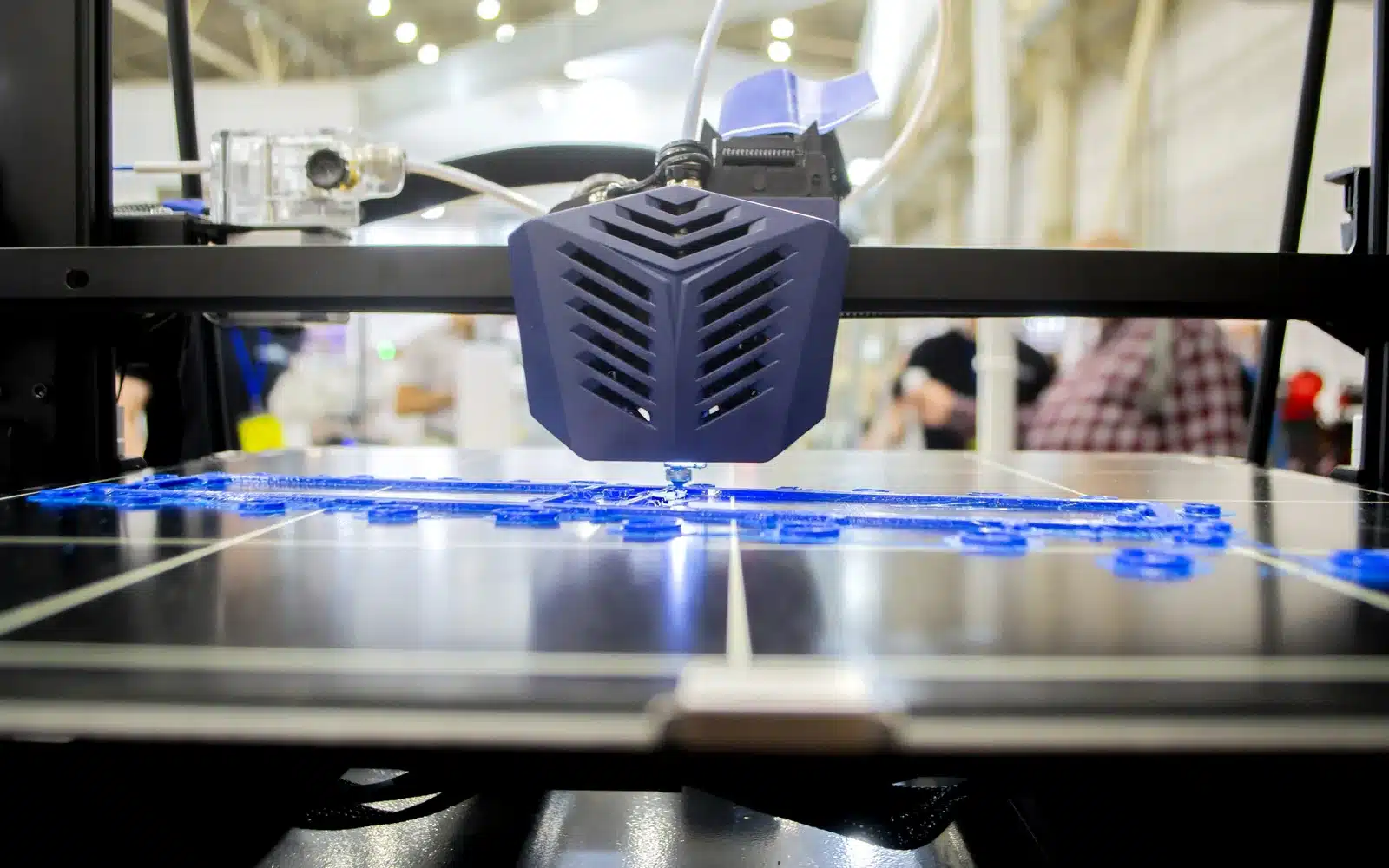
The most common 3D printer nozzle size is 0.4 mm because it balances detail, print time and reliable flow. A different diameter changes much more than the opening at the tip. It affects line width, usable layer height, small features, flow demand and every slicer profile tied to the nozzle.
Smaller nozzles: detail at a slower pace
A 0.25 mm nozzle can reproduce thinner walls and finer text than a 0.4 mm nozzle. The narrow path is easier to clog, especially with filled or inconsistent filament, and prints take longer because each line covers less area. Tiny layers also increase the number of passes needed for the same height.
Larger nozzles: wider lines and stronger shells
A 0.6 or 0.8 mm nozzle lays down wider tracks. Large functional parts can finish faster and gain strong, well-bonded walls. Fine holes, sharp corners and small text lose definition. The hotend must also melt more plastic per second, so maximum volumetric flow may become the limit before the advertised movement speed.
Layer height follows nozzle diameter
Use the range provided by the printer or slicer profile. A common working band is roughly 25 to 75 percent of nozzle diameter, but hotend design and profile validation take priority. A layer that is too tall has little contact with the previous one; an unnecessarily tiny layer can add time without visible benefit. For the full breakdown of what layer height changes and how to pick one for a given part, see the layer height guide.
Filled filaments need clearance
Wood, carbon-fiber and other filled materials contain particles that can clog a fine opening and abrade soft brass. Check the filament maker’s minimum diameter and nozzle-material recommendation. A hardened nozzle may need a different temperature because its heat transfer differs from brass.
Update the slicer after replacement
- Select or create the exact nozzle-size profile for the printer.
- Confirm nozzle diameter, line widths and layer-height limits.
- Use the matching start procedure and machine limits.
- Run a modest flow and temperature check with known filament.
- Recheck Z offset if the printer’s replacement procedure requires it.
Do not fake a larger nozzle by changing only line width. Slicers can safely use lines somewhat wider than the opening, but the validated profile controls how far and how fast. See the line width guide for how much wider slicers actually go and why.
Choose by the part
- Fine miniatures and tiny text favor a smaller opening.
- Large prototypes and functional shells favor wider lines.
- The hotend can supply the required volumetric flow.
- The filament is compatible with the opening and nozzle material.
- A complete matching slicer profile is available.