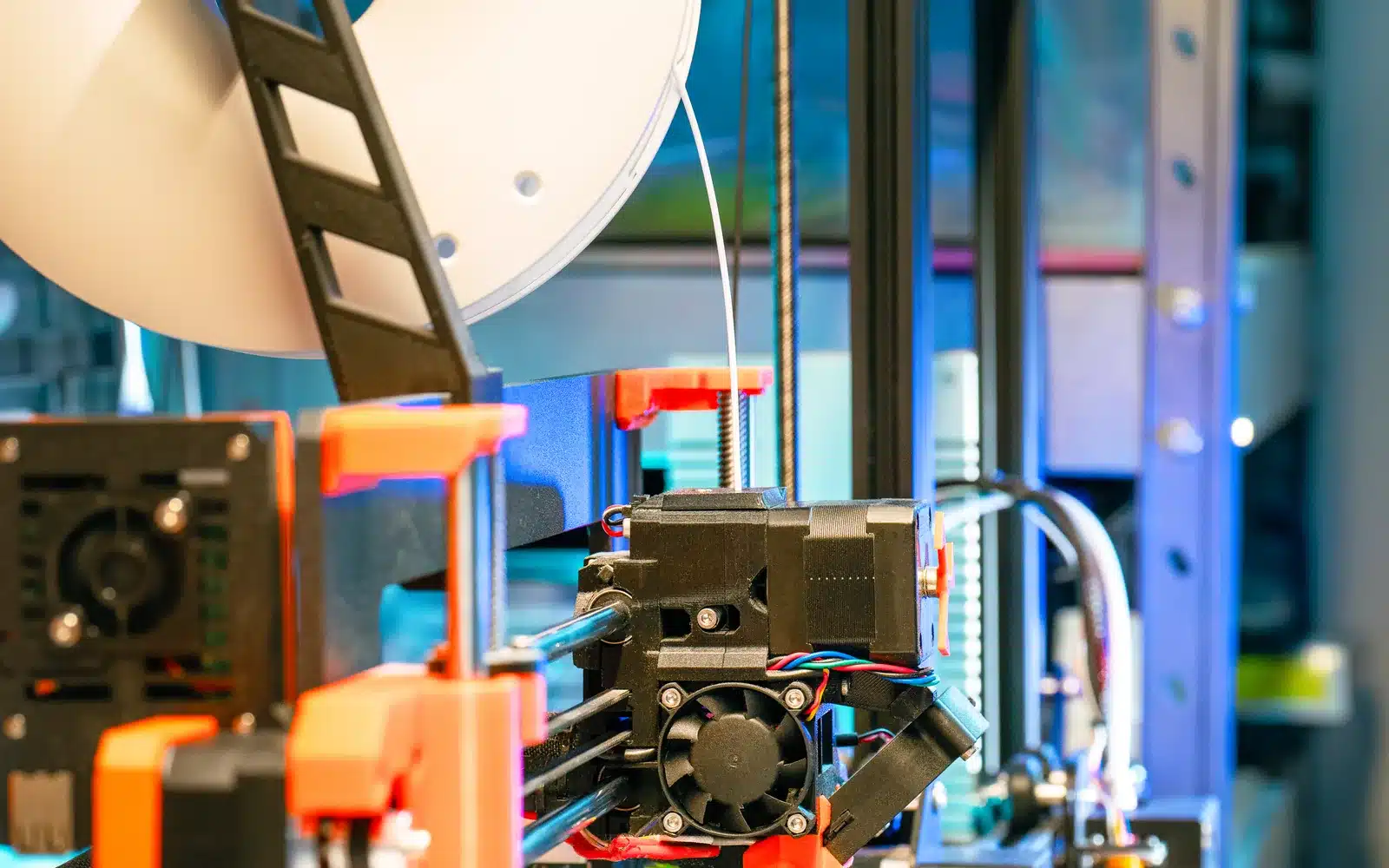
A bed-slinger moves the build plate back and forth on one horizontal axis. A CoreXY printer keeps the bed still in X and Y while belts move the toolhead across both axes. The layout influences speed, footprint and maintenance, but it does not guarantee print quality. A third layout, delta, moves all three axes together instead, trading a rectangular build volume for a different speed and calibration tradeoff.
Why moving mass matters
On a bed-slinger, the machine accelerates the plate and the growing print. A tall, heavy model can sway or place more demand on the Y axis. CoreXY motion keeps that part stationary in the horizontal plane, which suits higher acceleration and tall builds.
Space around the machine
A moving bed needs clearance in front and behind the frame. The advertised footprint may not include that travel or the cable bend. Many CoreXY machines fit their motion inside a box-shaped frame, although doors, spool holders and waste chutes can still add depth.
Belt paths and maintenance
Bed-slinger mechanics are usually easy to see and understand. A CoreXY belt path is longer and must keep both sides working together. Incorrect routing, uneven tension or a loose pulley can distort motion. Preassembled machines reduce initial work, but they do not make the mechanism maintenance-free.
Enclosures and materials
The box frame of a CoreXY printer is convenient to enclose, which is useful for ABS and ASA. Some bed-slingers can also use an enclosure, provided the printer and electronics are rated for it. The motion layout alone does not determine material support.
Speed claims need context
Maximum travel speed is not the same as a useful print speed. Hotend flow, cooling, acceleration, noise and model geometry set practical limits. A slow, well-calibrated bed-slinger can produce a cleaner part than a CoreXY machine running an unsuitable profile.
Choose from the constraints
- Measure the full moving footprint, not only the frame.
- Consider the tallest and heaviest parts you expect to print.
- Check whether the material needs an enclosure.
- Compare supported profiles, replacement parts and documentation.
- Decide whether simple visible mechanics or higher motion potential matters more.