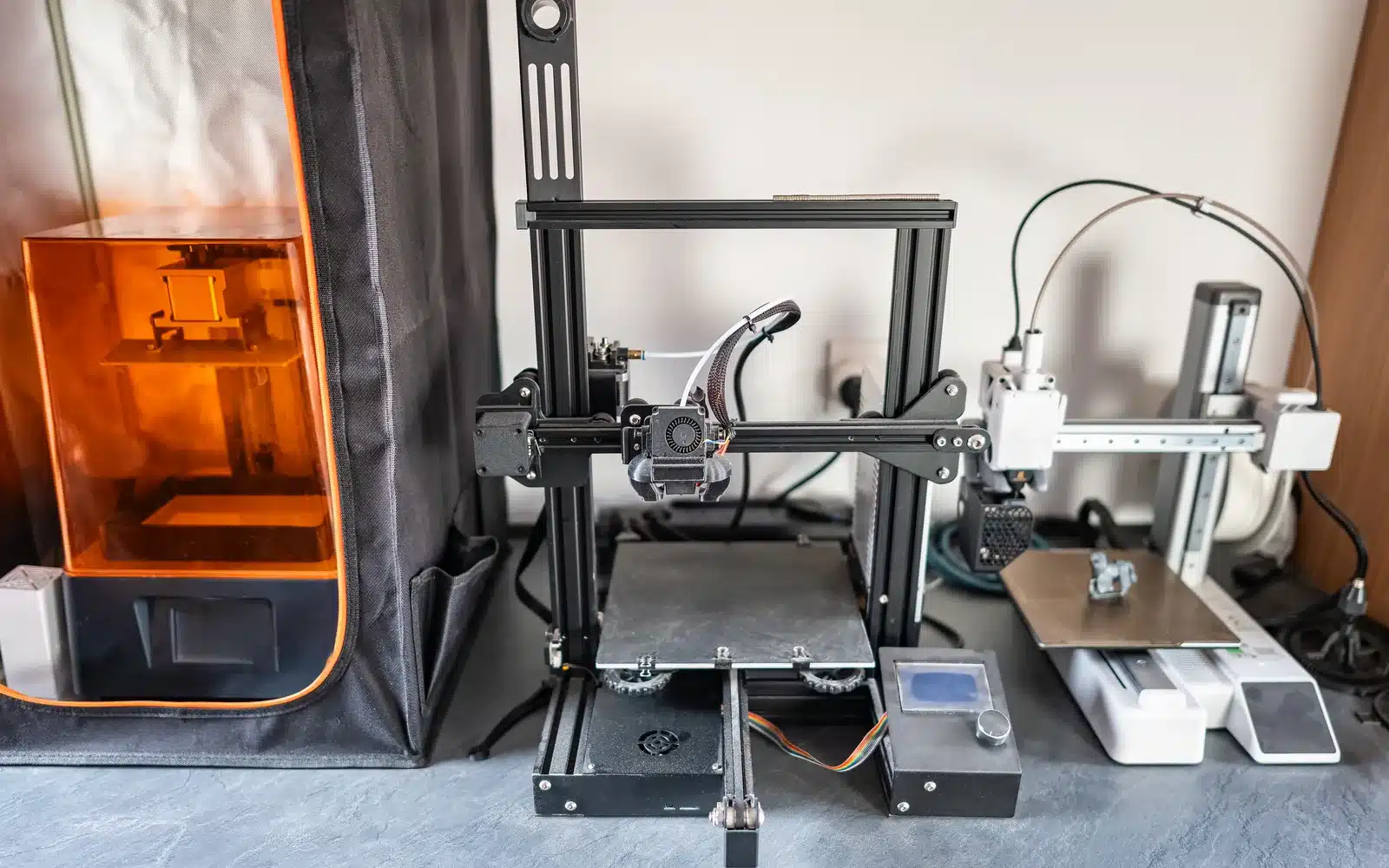
FDM printers melt filament and place it in lines. Resin printers cure liquid photopolymer one layer at a time with light. Resin captures smaller surface detail, while FDM is generally easier for larger functional parts and a first home workshop.
Detail and surface finish
Resin handles tiny text, miniature faces and fine textures with fewer visible layer lines. FDM detail depends on nozzle size and orientation, and curved surfaces show stepping more readily. For brackets, organizers and prototypes, that cosmetic difference may not matter.
Part size and running cost
Consumer FDM printers commonly offer a larger build area for the price. Filament is easy to weigh and store, and unused material stays on the spool. Resin workflows also consume gloves, cleaning liquid, filters, release film and curing equipment. Failed liquid-resin prints need careful cleanup.
Strength is not one number
FDM parts are anisotropic: they are usually weaker between layers, so orientation matters. Standard resins can be brittle, although tough and engineering grades change the result. Choose a tested material for the load, temperature and exposure rather than assuming one process is stronger.
Resin needs a controlled workspace
Uncured resin and contaminated cleaning liquid require gloves, eye protection, ventilation and disposal according to the safety data and local rules. Keep them away from children, pets and food areas. Do not pour resin or solvent down a drain.
Cleanup after the print
An FDM part may need support removal and a trimmed brim. A resin part must drain, wash and cure using the process specified for that resin. Hollow resin models also need correctly placed drain holes so liquid is not trapped inside.
A practical first choice
Choose FDM for household fixtures, prototypes, larger models and a simpler material workflow. Choose resin when fine detail is the main requirement and you can dedicate a ventilated, cleanable workspace to post-processing. Owning both only makes sense when both kinds of work recur.